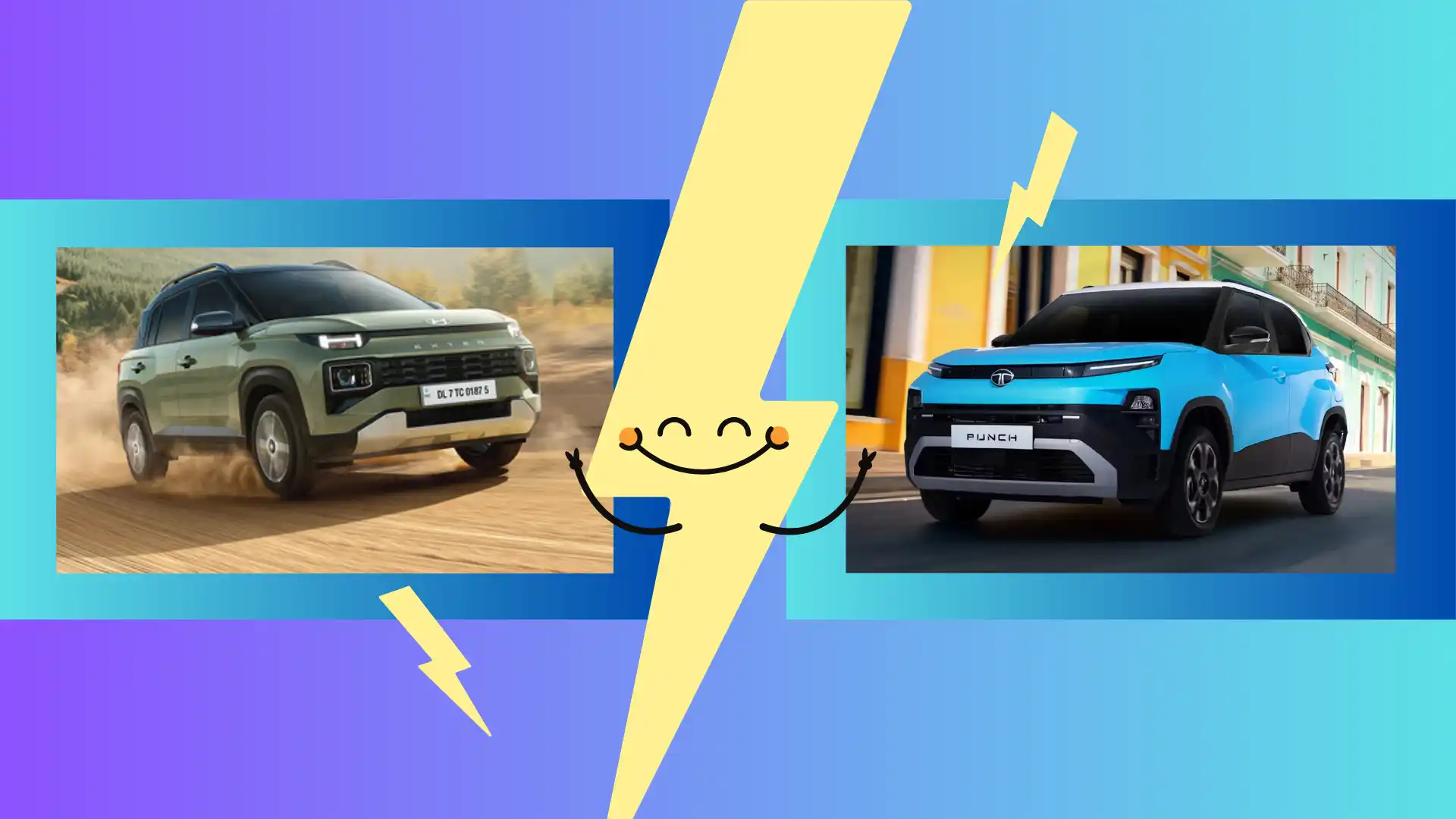
2026 Tata Punch vs Hyundai Exter: India’s budget SUV segment continues to heat up, and in 2026, two compact contenders are firmly in the spotlight — the updated Tata Punch and the ever-popular Hyundai Exter. Both target middle-class families looking for a stylish, fuel-efficient and feature-rich SUV without stretching their budget.
But when you look closely at pricing, mileage, performance, features and safety, the differences become clearer. Here’s a fresh, buyer-focused comparison to help you decide which SUV suits your needs better.
Price Check: Small Difference, Big Impact
Affordability is the backbone of this segment, and both SUVs are priced competitively.
The 2026 Tata Punch undercuts the Exter slightly at the entry level, making it appealing for first-time car buyers. While Hyundai Exter’s top variants are more affordable than Punch’s fully loaded trims, Tata’s lower starting price and wider variant spread give it an edge for budget-focused customers.
CNG buyers will also notice that Punch offers a marginally cheaper entry into factory-fitted CNG ownership.
Engine and Driving Experience
Under the hood, both SUVs use a 1.2-litre petrol engine, but the driving character is very different.
The 2026 Tata Punch stands out by offering a turbo-petrol option, which delivers noticeably stronger performance. This makes it more confident on highways and better suited for overtaking or long-distance travel.
Hyundai Exter, on the other hand, sticks to a naturally aspirated petrol engine tuned for smoothness. It feels refined and easy to drive in city traffic, which is exactly where most Exter owners will spend their time.
In short: Punch feels more powerful and versatile, while Exter focuses on comfort and city-friendly drivability.
Mileage
Fuel efficiency remains a top priority for middle-class buyers.
- Tata Punch offers slightly better mileage in petrol form, making it suitable for mixed city-highway usage.
- Hyundai Exter edges ahead in CNG efficiency, which could translate into lower daily running costs for urban commuters.
If your usage is primarily city-based with high monthly running, Exter CNG makes financial sense. For petrol users, Punch holds a small advantage.
Features and Cabin Technology
Both SUVs are packed with modern features, but Tata has clearly pushed the envelope with the Punch facelift.
The Punch now offers a larger touchscreen, a fully digital instrument cluster, 360-degree camera, and added comfort-focused features like ambient lighting and an air purifier. This gives it a more premium feel, especially in higher trims.
Hyundai Exter counters with connected car tech, OTA updates, paddle shifters in AMT variants, and the reliability of Hyundai’s infotainment ecosystem. It may not look as flashy on paper, but it remains intuitive and user-friendly.
Safety
Safety is where the 2026 Tata Punch clearly pulls ahead.
With a 5-star Bharat NCAP safety rating, Punch reassures family buyers who prioritise build quality and crash protection. Multiple airbags, stability control and a strong body structure add to its appeal.
Hyundai Exter does offer standard 6 airbags and essential electronic safety aids, but the absence of an NCAP rating may concern safety-conscious customers.
Which SUV Should You Buy in 2026?
For middle-class buyers shopping in the ₹6–10 lakh range, the 2026 Tata Punch feels like the more well-rounded package. It offers:
- Lower entry price
- Optional turbo-petrol performance
- Better safety credentials
- More premium features in top variants
The Hyundai Exter still makes sense if your priority is city driving, smooth petrol performance, or maximum savings with a CNG setup.
If you want a tougher, safer and more feature-packed compact SUV, Tata Punch is the stronger choice. If comfort, simplicity and urban efficiency top your list, Hyundai Exter remains a sensible alternative.