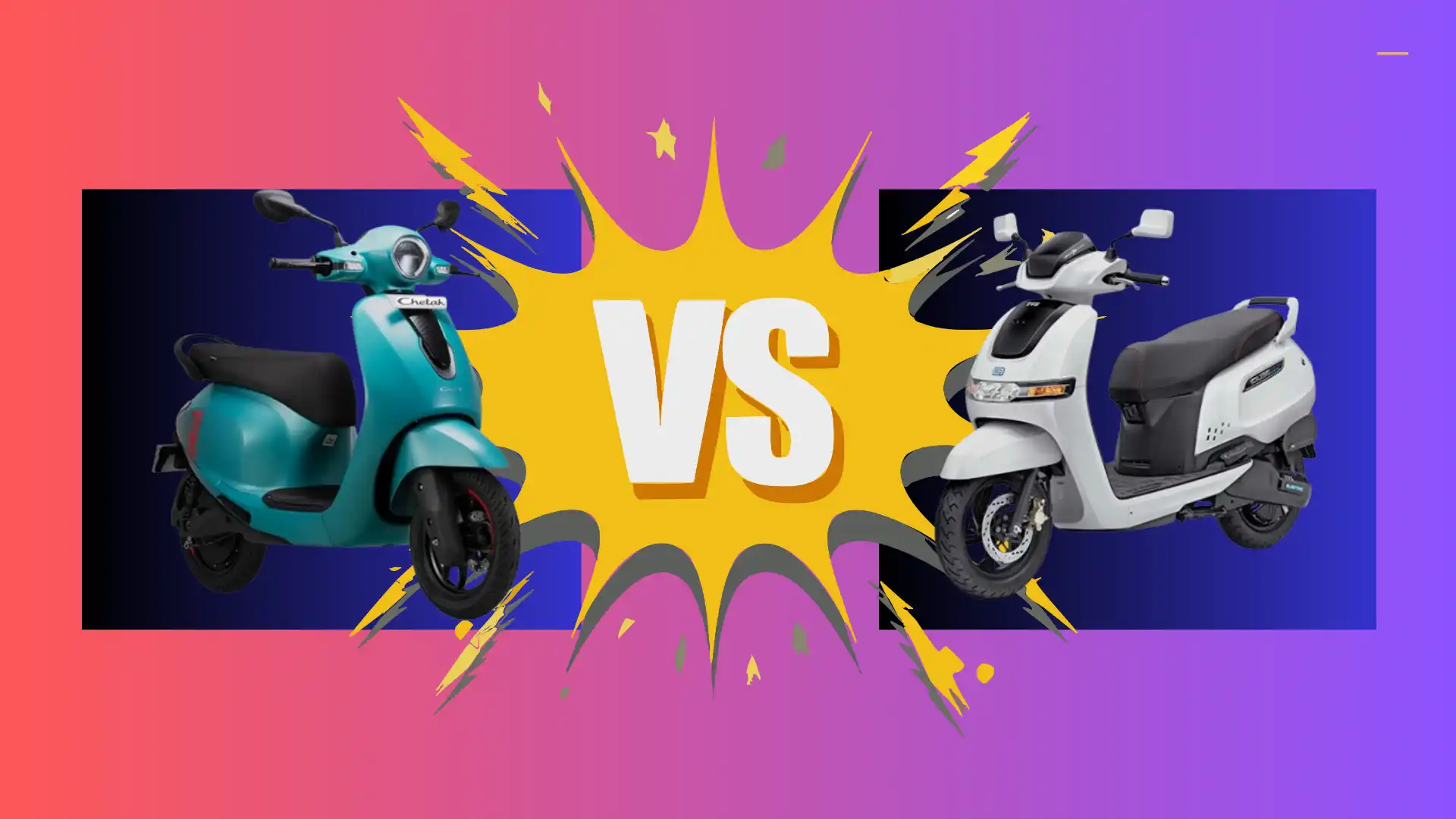
Bajaj Chetak C2501 vs TVS iQube 2.2kWh: India’s electric two-wheeler market is heating up, and if you’re planning to switch to an EV for daily commuting, low running cost, and hassle-free maintenance, two popular options stand out — Bajaj Chetak C2501 and TVS iQube 2.2kWh.
While both scooters target urban riders, their approach is very different. One focuses on affordability and range, while the other leans towards performance and smart features. Let’s break it down in a clear, buyer-friendly comparison.
Price Comparison: Budget vs Feature-Packed
In terms of pricing, the Bajaj clearly takes the lead. The Bajaj Chetak C2501 is positioned as a value-oriented electric scooter, making it ideal for budget-conscious buyers.
On the other hand, the TVS offers the TVS iQube at a slightly higher price, but justifies the premium with better speed, faster charging, and connected technology.
Verdict:
If affordability is your top priority, Chetak C2501 wins. If you’re okay paying more for added tech and performance, iQube feels more premium.
Battery Capacity & Charging Convenience
Battery and charging play a major role in daily usability.
- Chetak C2501 gets a larger 2.5 kWh battery, delivering longer backup but slower charging with a 750W charger.
- TVS iQube 2.2kWh uses a slightly smaller battery but supports faster charging via a 950W portable charger and comes with IP67-rated battery protection, which adds peace of mind in Indian conditions.
For users who charge frequently and want quicker top-ups, the iQube feels more practical. Those who prefer fewer charging cycles may like the Chetak’s larger battery.
Range & Performance: Mileage vs Speed
When it comes to riding range, Bajaj has the upper hand. However, TVS dominates in performance.
- Bajaj Chetak C2501 offers an IDC-certified range of 113 km, making it suitable for longer daily commutes.
- TVS iQube 2.2kWh delivers 94 km of range, but compensates with regenerative braking, which helps in real-world efficiency.
Speed is where the iQube clearly shines:
- iQube top speed: 75 km/h
- Chetak top speed: 55 km/h
Verdict:
Choose Chetak for range-focused city riding. Pick iQube if you want quicker acceleration and higher cruising speed.
Features & Technology: Simple vs Smart
The TVS iQube is clearly more tech-loaded. It offers:
- Full-color TFT display
- Bluetooth connectivity
- Call & music controls
- Smart app features
- Parking assist
Meanwhile, the Chetak C2501 keeps things simple but practical:
- LED lighting
- LCD display
- 25-litre under-seat storage
- Hill-hold assist
For riders who love connected tech and digital convenience, iQube feels more future-ready. For minimalists, Chetak gets the job done without complexity.
Also Read: Volvo EX60 EV SUV Announced: Global Debut on January 21, 2026 with Google Gemini AI
Bajaj Chetak C2501 vs TVS iQube 2.2kWh Differences
| Specification | Bajaj Chetak C2501 | TVS iQube 2.2kWh |
|---|---|---|
| Ex-showroom Price | ₹91,399 | ₹96,422 |
| Battery Capacity | 2.5 kWh | 2.2 kWh |
| Charging Time | ~3 hr 45 min (Full) | 0–80% in ~2 hr 45 min |
| Certified Range | 113 km | 94 km |
| Top Speed | 55 km/h | 75 km/h |
| Display | LCD | TFT Touchscreen |
| Smart Features | Basic | Advanced Connectivity |
- Buy Bajaj Chetak C2501 if:
You want an affordable electric scooter with longer range, low maintenance, and simple daily usability. - Buy TVS iQube 2.2kWh if:
You prefer better speed, faster charging, smart features, and a more tech-focused riding experience.
Both scooters are excellent city EVs, but your final choice should depend on whether you value range and price or performance and features.