A budget-friendly car is quietly dominating India’s auto market, and the numbers tell an incredible story.
While SUVs typically grab all the attention, one modest sedan has pulled off something remarkable. The Maruti Suzuki Dzire has become a sales sensation, leaving even popular SUVs in the dust.
The Numbers Don’t Lie
January 2026 turned out to be a blockbuster month for the Maruti Suzuki Dzire. The car attracted 19,629 new owners, compared to just 15,383 buyers during the same period last year. That’s a stunning 27.60% jump in sales—making it India’s second most-sold car right now.
What’s more surprising? It beat both the Tata Punch and Hyundai Creta, two SUVs that usually dominate sales charts.
So What’s the Secret?
The answer is simple: value for money. Starting at just ₹6.26 lakh, the Maruti Suzuki Dzire offers something for everyone. Whether you’re a college graduate buying your first car or a family looking for reliable transportation, this sedan checks all the boxes.
You can choose between petrol and CNG variants, with prices topping out at ₹9.31 lakh for the fully-loaded version. The CNG model costs around ₹8 lakh—perfect if you want to save big on fuel costs.
Fuel Efficiency That Actually Makes Sense
Here’s where things get interesting. The petrol Dzire delivers around 22-23 kilometers per liter, which is already impressive. But the CNG version? It gives an astonishing 31 kilometers per kilogram.
Do the math, and you’ll realize why taxi drivers and daily commuters love this car. Lower running costs mean more money stays in your pocket.
It’s Not Just Basic Transportation
Gone are the days when budget cars meant compromising on features. The new Dzire surprises with its equipment list:
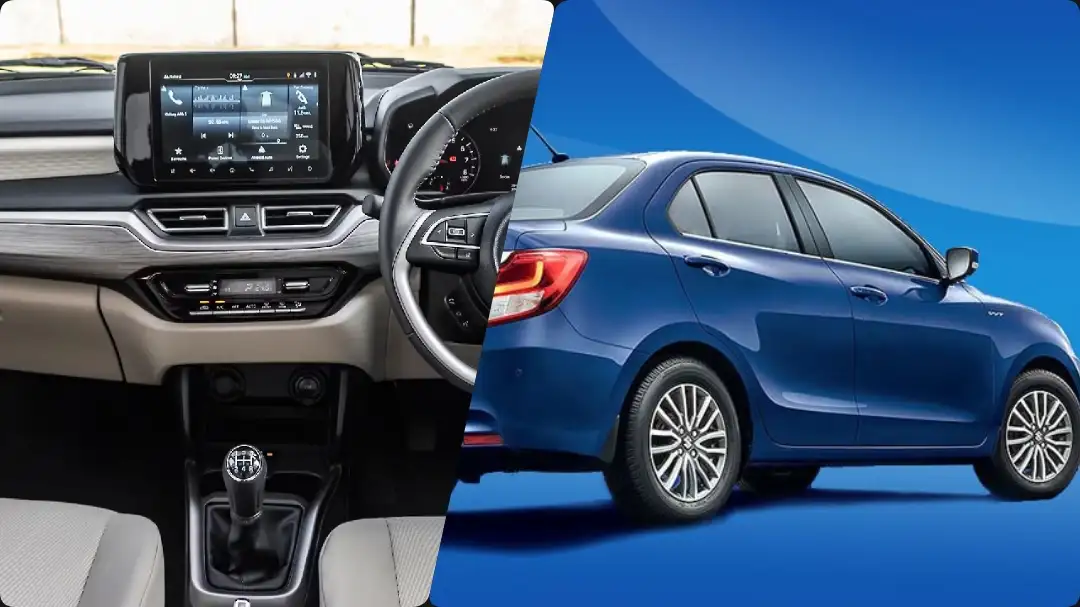
A crisp 9-inch touchscreen sits proudly on the dashboard, complete with Android Auto and Apple CarPlay. You get cruise control for highway drives, automatic climate control for comfort, and even a sunroof to add some joy to your journeys.
Keyless entry and push-button start make it feel premium. Plus, the 378-liter boot space easily swallows luggage for weekend getaways.
Built Like a Tank
Safety used to be an afterthought in budget cars. Not anymore. The Maruti Suzuki Dzire comes with 6 airbags as standard across all variants—not just the expensive ones.
Add features like ABS with EBD, Electronic Stability Program, hill hold assist, and parking sensors, and you’ve got a car that genuinely cares about keeping you safe.
The real game-changer? Both Global NCAP and Bharat NCAP awarded it a 5-star safety rating. That’s the highest possible score, putting it on par with cars costing twice as much.
The Engine That Powers Success
Under the hood sits Maruti’s proven 1.2-liter K-Series petrol engine. It produces 90 PS and 113 Nm of torque—not jaw-dropping numbers, but perfectly adequate for city driving and highway cruising.
You can pick between a 5-speed manual or an AMT automatic gearbox. The automatic makes city traffic bearable without the premium price tag of a traditional automatic.
Why It’s Winning Hearts
Three things make the Maruti Suzuki Dzire unbeatable: low maintenance costs, excellent resale value, and widespread service network. Maruti’s after-sales support is legendary in India, with service centers even in smaller towns.
For first-time buyers, it’s affordable without feeling cheap. For families, it’s practical without being boring. For taxi operators, it’s economical without compromising on durability.
Also Read: Border 2 Day 12 vs Mardaani 3 Day 5 Collection: Sunny Deol’s War Epic Still Rules
The Bottom Line
In a market obsessed with SUVs and crossovers, the Dzire proves that sensible choices still win. It doesn’t try to be flashy or pretend to be something it’s not.
Instead, it focuses on what matters: reliability, efficiency, safety, and value. Sometimes, that’s exactly what people need.
With sales numbers climbing and customer satisfaction remaining high, the Dzire isn’t just surviving—it’s thriving. And that’s a lesson many automakers should pay attention to.
The question isn’t why the Dzire is selling so well. The real question is: what took everyone so long to notice?