New Tata Punch Facelift vs Tata Punch EV: If you’re planning to buy a compact SUV in 2026, chances are the Tata Punch is already on your radar. Now, with the launch of the 2026 Tata Punch Facelift and the growing popularity of the Punch EV, buyers face a classic modern dilemma — fuel-powered affordability or electric future-ready mobility?
Both models come from the house of Tata Motors, both wear the tough Punch DNA, but their philosophy — and price — are very different. Here’s a clean, confirmed, and easy-to-understand breakdown of how these two Punch siblings stack up.
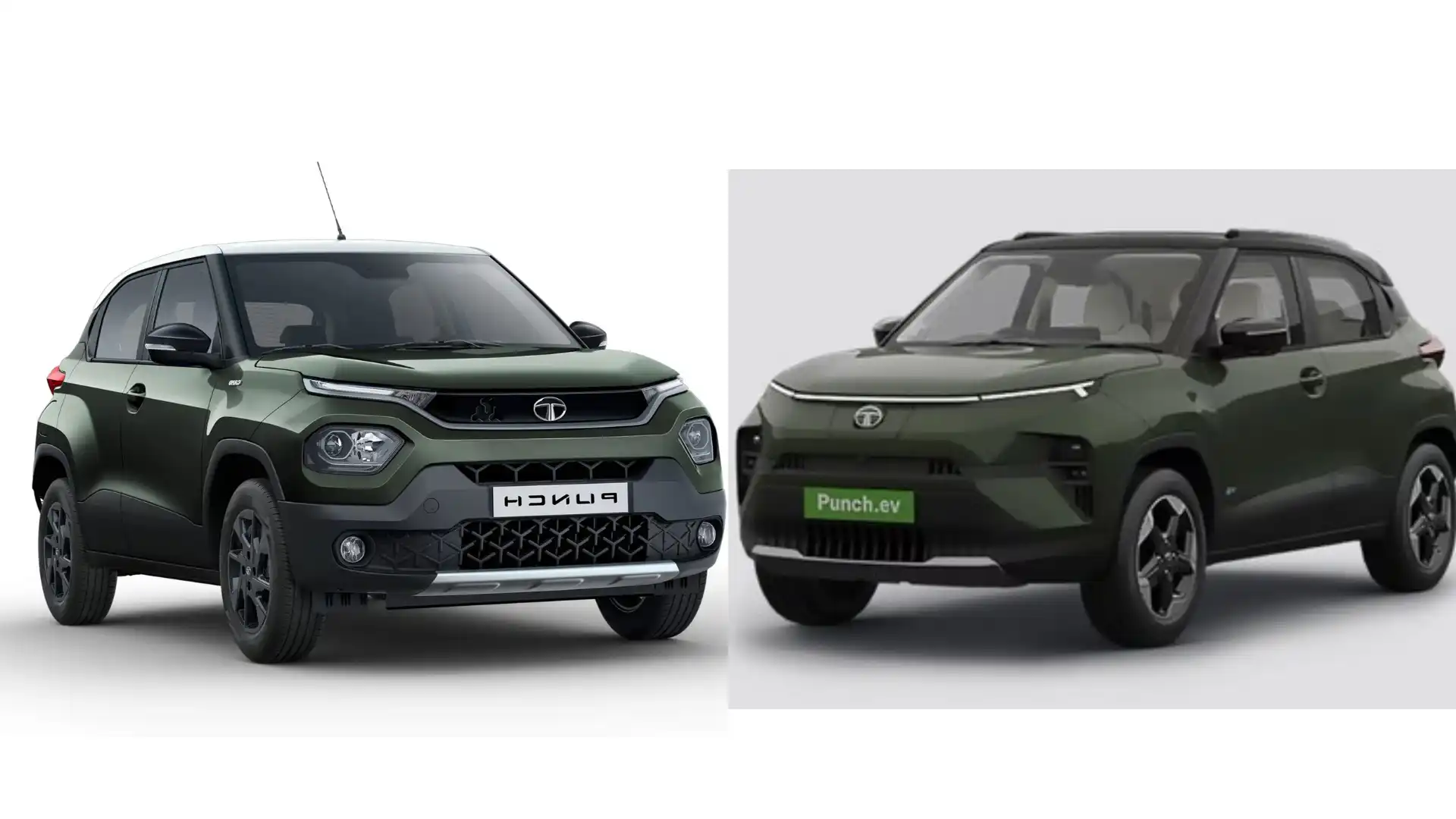
New Tata Punch Facelift vs Tata Punch EV
Price Check: Budget-Friendly vs Premium Electric
Let’s talk money first — because that’s where the biggest gap lies.
- Tata Punch Facelift (ICE): Starts at Rs 5.59 lakh and goes up to Rs 10.54 lakh (ex-showroom).
- CNG variants kick off from Rs 6.69 lakh, making it one of the most affordable SUVs with factory-fitted CNG.
- Tata Punch EV: Priced from Rs 9.99 lakh to Rs 14.44 lakh (ex-showroom).
Verdict: If value-for-money is your top priority, the Facelift clearly undercuts the EV. But if you’re ready to pay more for zero-emission tech, the EV steps in confidently.
Powertrain Face-Off
This is where the personalities truly split.
Tata Punch Facelift (ICE)
- 1.2L petrol engine (naturally aspirated and turbo-petrol options)
- Power output: 87 bhp (NA) / up to 118 bhp (turbo)
- CNG option with 72 bhp
- Gearboxes: 5-speed MT, 6-speed MT, 5-speed AMT
- Fuel efficiency: ~18–20 kmpl
- Segment-first CNG-AMT setup
Tata Punch EV
- 25 kWh and 35 kWh battery packs
- Power: 80 bhp / 121 bhp
- Instant torque: 114–190 Nm
- Single-speed automatic
- Certified range: 315–421 km (ARAI)
- DC fast charging: 10–80% in about 56 minutes
Verdict: The Facelift suits traditional buyer and long-distance fuel users, while the EV wins hearts with instant torque, silent drive, and lower running costs.
Design & Dimensions
At first glance, both look unmistakably Punch — bold stance, high bonnet, and SUV confidence.
- Ground clearance: 187–190 mm
- Boot space: 366 litres
- Seating: 5 passengers
- EV is slightly longer (3857 mm) than the ICE version (3827 mm)
Key visual differences:
- Punch EV gets a closed grille, aero-style alloy wheels
- Facelift retains a more traditional grille design
- EV interior features white-grey dual-tone theme, while ICE models stick to darker sporty shades
Features & Safety
Tata hasn’t cut corners here — both cars are feature-rich and safety-focused.
Common Highlights
- 10.25-inch touchscreen infotainment
- Wireless Android Auto & Apple CarPlay
- Sunroof
- 360-degree camera
- 6 airbags
- 5-star Bharat NCAP safety rating
EV Exclusives
- Ventilated front seats
- Larger 10.25-inch digital driver display
- Air purifier
- V2L & V2V charging (power your gadgets or even another EV)
Facelift Extras
- Paddle shifters (turbo variants)
- Height-adjustable driver seat
- Wider choice of fuel options
Which Punch Should You Choose?
So, petrol or plug-in — which Punch punches harder?
Choose the Tata Punch Facelift if you want:
- Lower upfront cost
- Petrol or CNG flexibility
- Familiar driving feel with modern upgrades
Choose the Tata Punch EV if you want:
- Zero emissions
- Silent, quick acceleration
- Future-ready tech and premium features
The Punch Facelift is the smart, budget-conscious all-rounder, while the Punch EV is for buyers ready to embrace India’s electric future. Different roads, different drivers — Tata has you covered either way.
Now the real question is — which one would you park in your driveway?