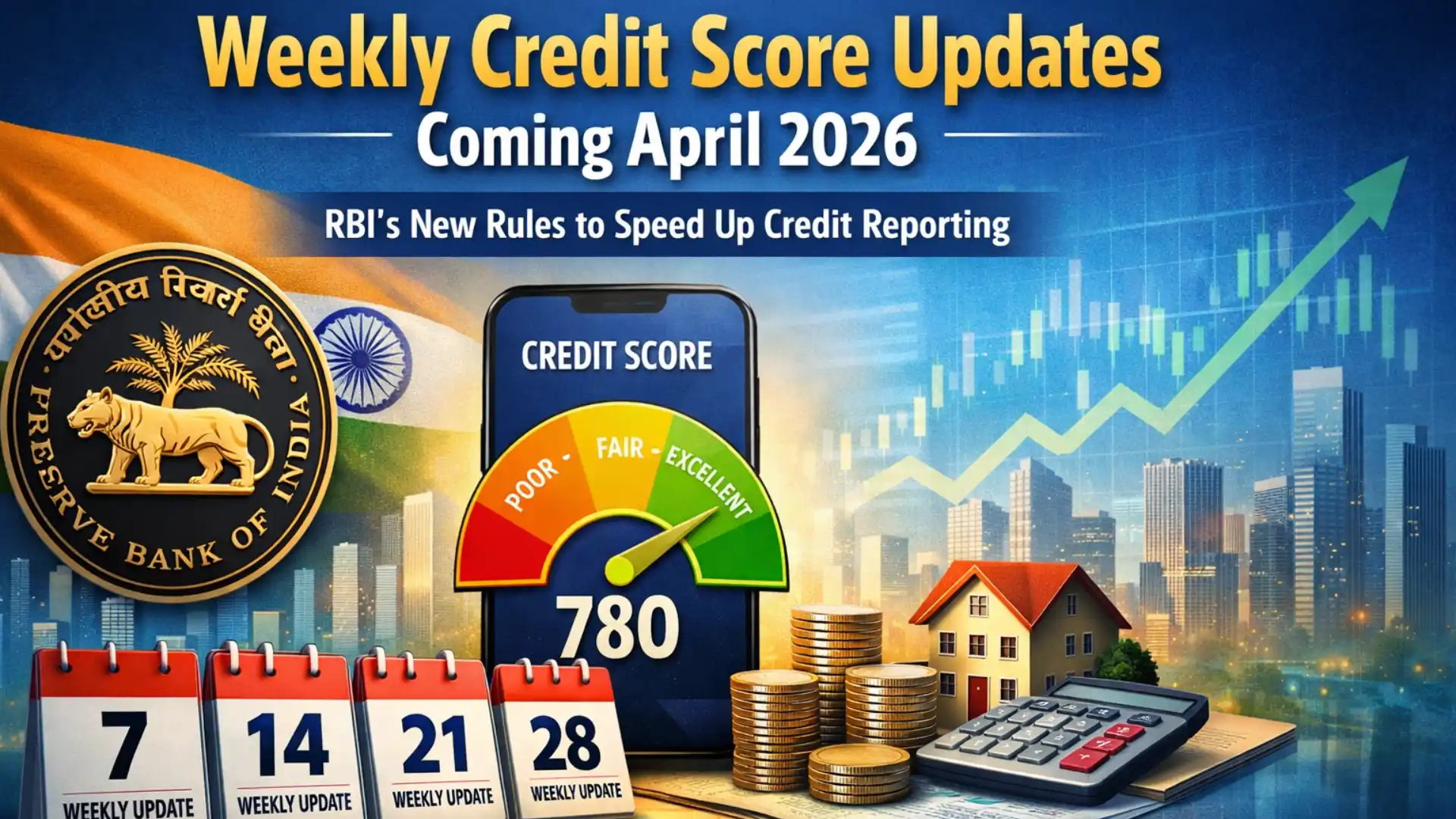
New RBI Credit Score Reporting Rule: India’s lending ecosystem is preparing for a structural shift as the Reserve Bank of India (RBI) introduces new credit reporting norms effective April 1, 2026. The move is designed to make borrower data more current, reduce delays in loan processing, and strengthen financial discipline across the system.
As per the new framework, credit scores—used by banks and NBFCs to evaluate loan eligibility—will be updated on a weekly basis, replacing the existing 15-day update cycle. This change is expected to significantly impact how quickly repayment behavior reflects in a borrower’s credit profile.
What the New RBI Credit Score Reporting Rule Means
Currently, improvements in repayment behavior such as clearing dues or paying EMIs on time often take weeks to appear in credit reports. This delay can affect loan approvals, interest rates, and credit card applications.
From April 2026 onward, credit information companies will refresh consumer data every week, ensuring that credit scores closely mirror real-time financial activity.
Major credit bureaus including TransUnion CIBIL and Experian will follow a fixed monthly reporting calendar.
Also Read: Shubman Gill vs Rohit Sharma in ODI: Stats, Impact, and Who Truly Rules as an Opener
New Credit Score Update Schedule (Effective April 2026)
| Update Frequency | Reporting Dates |
|---|---|
| Weekly Refresh | 7th of every month |
| Weekly Refresh | 14th of every month |
| Weekly Refresh | 21st of every month |
| Weekly Refresh | 28th of every month |
| Additional Cycle (if applicable) | Month-end |
This means credit reports may be updated up to five times a month, drastically reducing lag in score changes.
Impact on Loan Borrowers and Credit Card Users
For borrowers, the RBI’s decision brings both opportunity and responsibility.
Positive Effects
- Faster reflection of timely EMI and bill payments
- Improved chances of quick loan approval
- Higher likelihood of better interest rates
- Reduced dependency on outdated credit records
Things to Watch Out For
- Payment delays will impact scores almost immediately
- Even short-term defaults can affect upcoming loan applications
- Financial discipline becomes more critical than ever
In essence, credit scores will now respond faster to both good and bad financial behavior.
Why Banks and NBFCs Support This Change
Financial institutions often rely on credit data that may already be weeks old. The new weekly update system provides lenders with:
- More accurate borrower risk profiles
- Stronger default prevention mechanisms
- Better fraud detection
- Improved lending decisions
By accessing near real-time credit information, banks can price loans more responsibly and avoid overexposure to risky borrowers.
Strengthening India’s Credit Infrastructure
The RBI’s move is widely seen as a step toward modernising India’s financial reporting framework. With quicker data flow:
- Credit transparency improves
- Trust between lenders and borrowers strengthens
- Systemic risk in retail lending reduces
Experts believe this reform aligns India’s credit system with international best practices while encouraging long-term responsible borrowing habits.
The introduction of weekly credit score updates from April 1, 2026, marks a turning point in India’s credit market. Borrowers who maintain consistent repayment discipline will benefit faster, while delays and defaults will be visible almost immediately.
As credit behaviour becomes more transparent, staying financially punctual will no longer just be good practice—it will be essential.3
References
- https://economictimes.com/news/economy/policy/rbi-orders-weekly-loan-data-reporting-to-credit-information-cos-from-april-1-2026/articleshow/125768766.cms
- https://www.moneycontrol.com/news/business/personal-finance/rbi-rules-made-credit-score-updates-faster-in-2025-what-to-expect-in-2026-13743123.html

Yogesh Kolhe is a market and business news author with a focus on the automobile sector and gold and silver price movements, offering readers practical insights into industry and market trends.